From Problem Finding to Prototyping too fast
How a spontaneous UX for AI training enrolment led straight from problem discovery into prototyping — and what that premature move revealed about the very tool being built.
I joined the training very spontaneously. I just stumbled upon the book “AI for UX” by Greg Nudelman and saw that a training would start the next day.
It felt like an easy, fast thing to do and I would be part of the founders cohort. I like beginnings – so I’ll give it a try.
The first session
The whole training consists of 12 sessions and a bit of buzz around them. The first session today was about introducing all of us — we are a bunch of UX people from all over the world. And Greg gave an intro into the topic, what we would cover the next weeks, and the most important task: Everyone has to select a project topic to work on for the next weeks — we have to upload it on Sunday on the Circle platform.
So I started with…
Jumping into project discovery
I did not start with an idea, but with a lived experience. A recent project with people from different disciplines, countries, and service providers. Business defined one thing, developers built another. A happy path presentation became the shared reference, but only showed the surface. The real complexity stayed hidden until it was expensive.
How the project idea emerged
I used Claude as a thinking partner to understand what that experience was pointing at — staying in problem space before jumping to solutions. Along the way:
- Several directions were explored and discarded
- Uncomfortable questions were asked: is this just facilitation? Does agile solve this already? Would people feel examined?
- The idea sharpened into something genuinely mine: a tool that surfaces hidden assumption gaps before teams commit to a direction
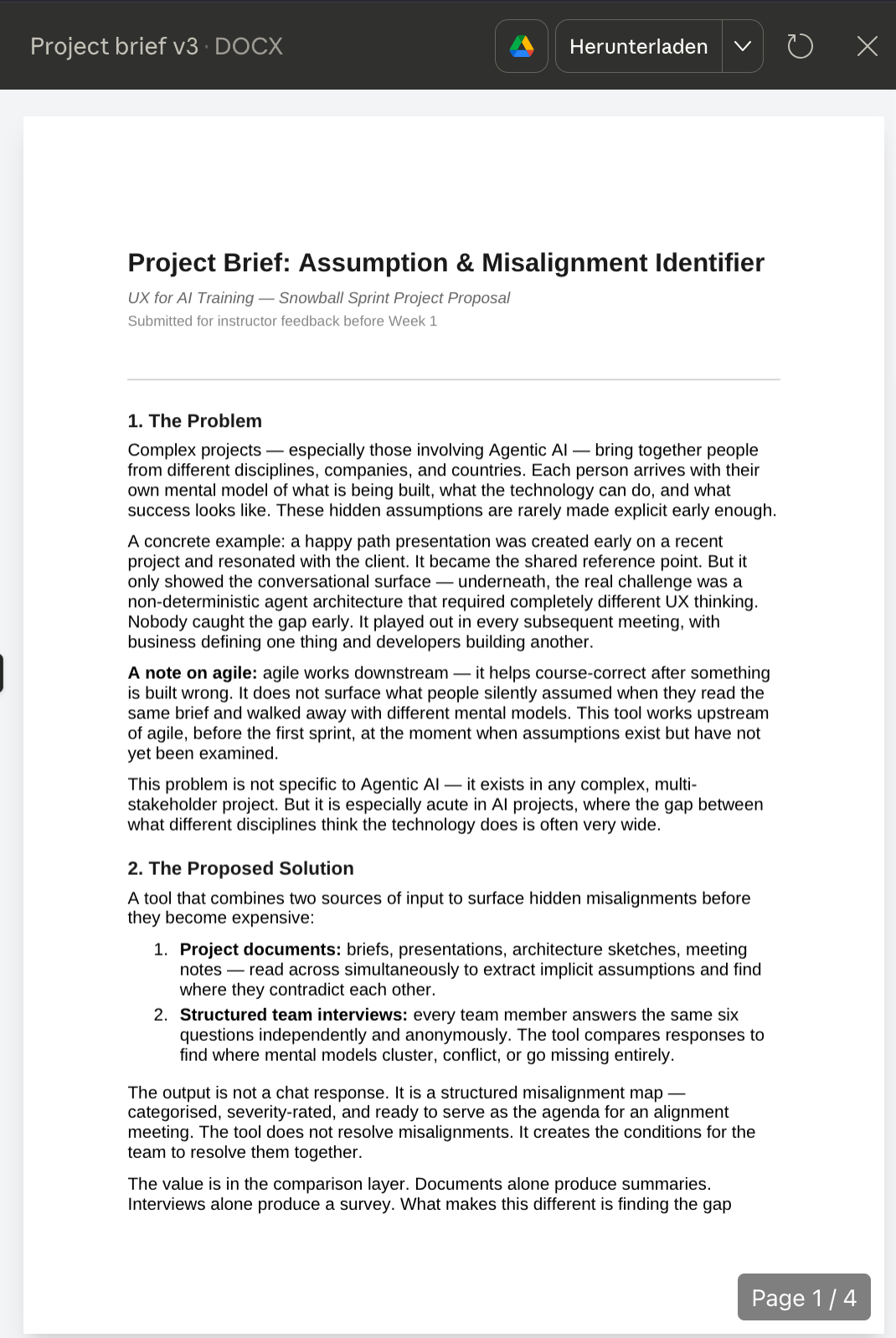
- So I created a Project brief, iterated across multiple versions and added external AI feedback
But then – jumping again, and too fast into prototyping
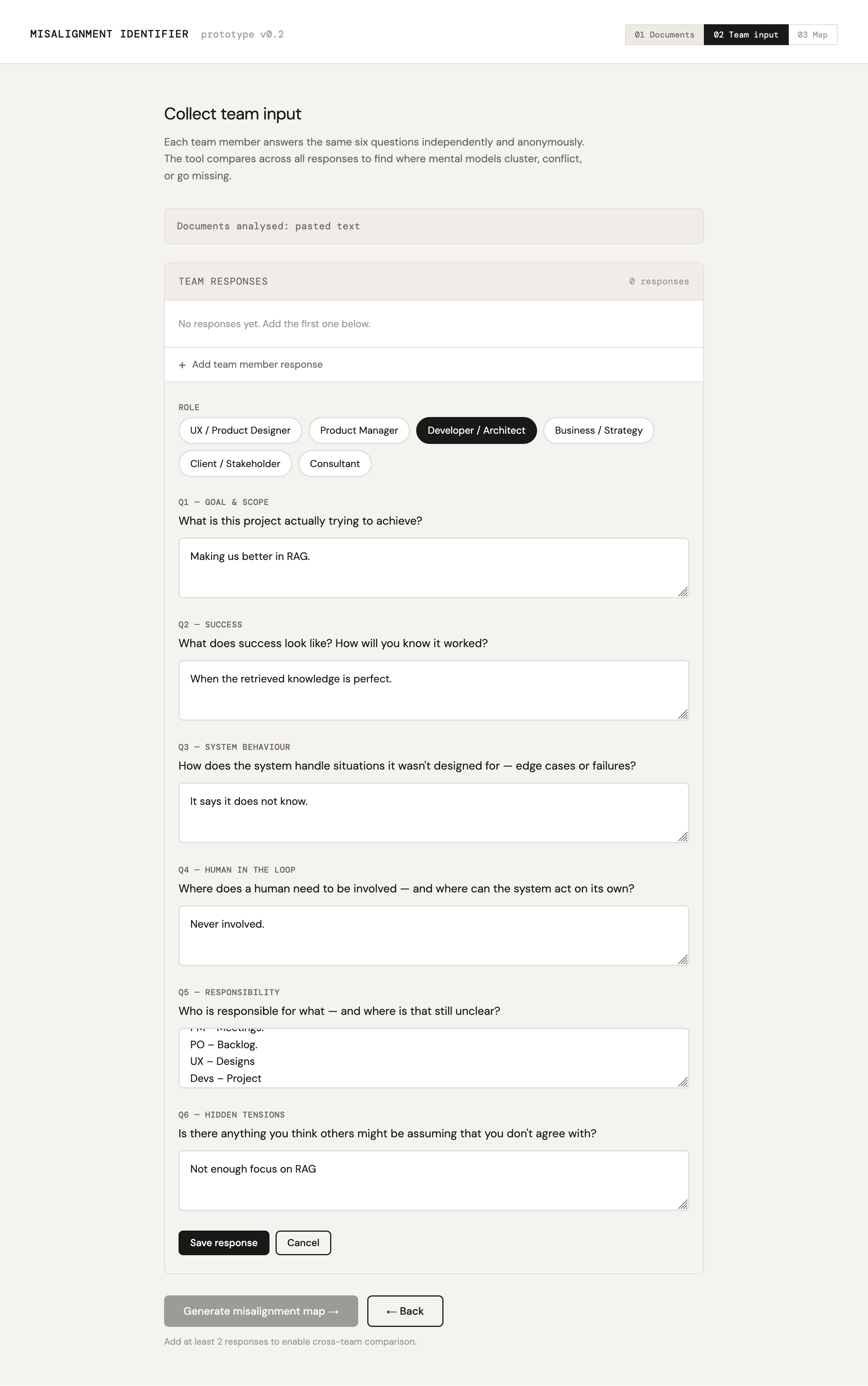
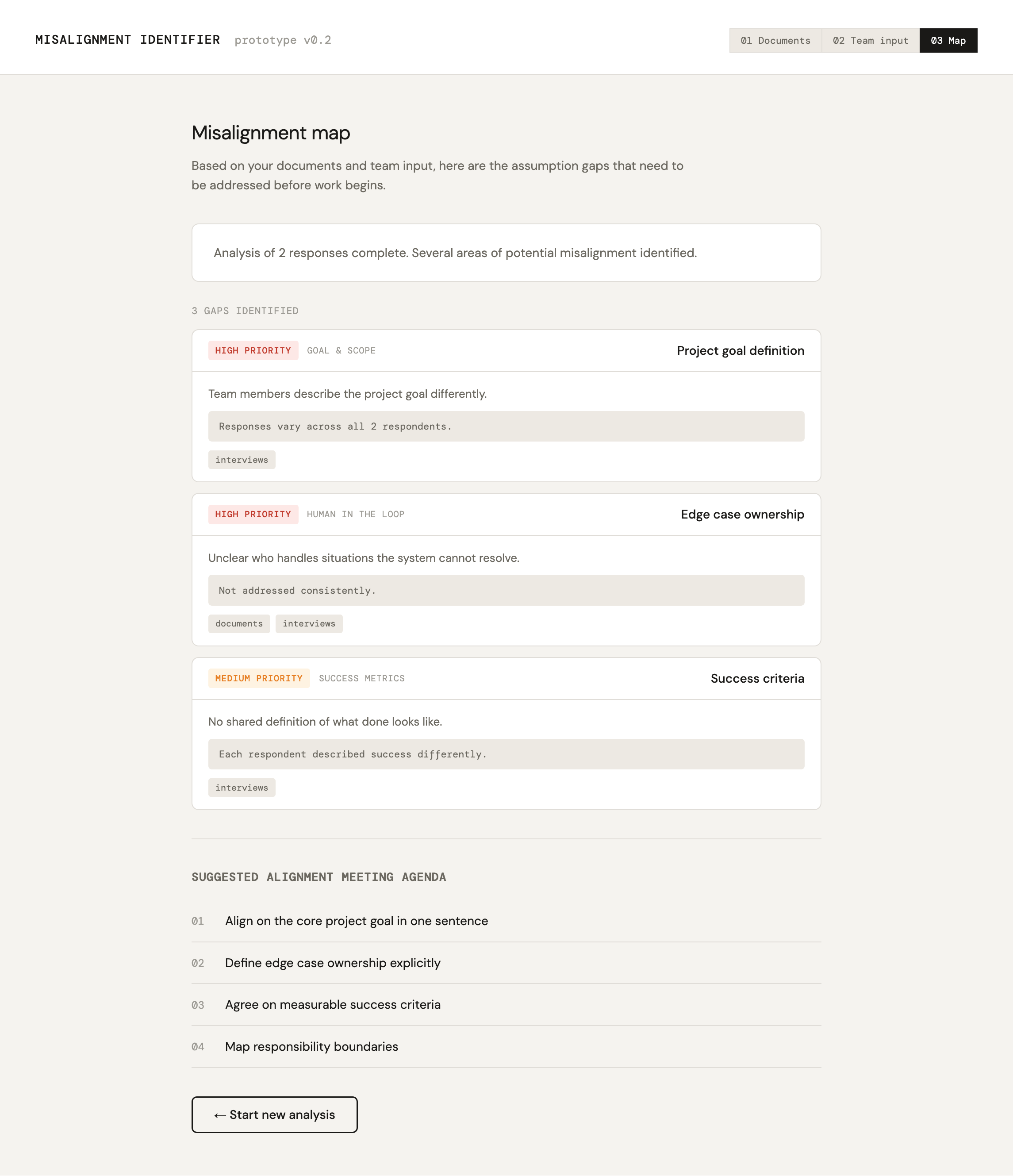
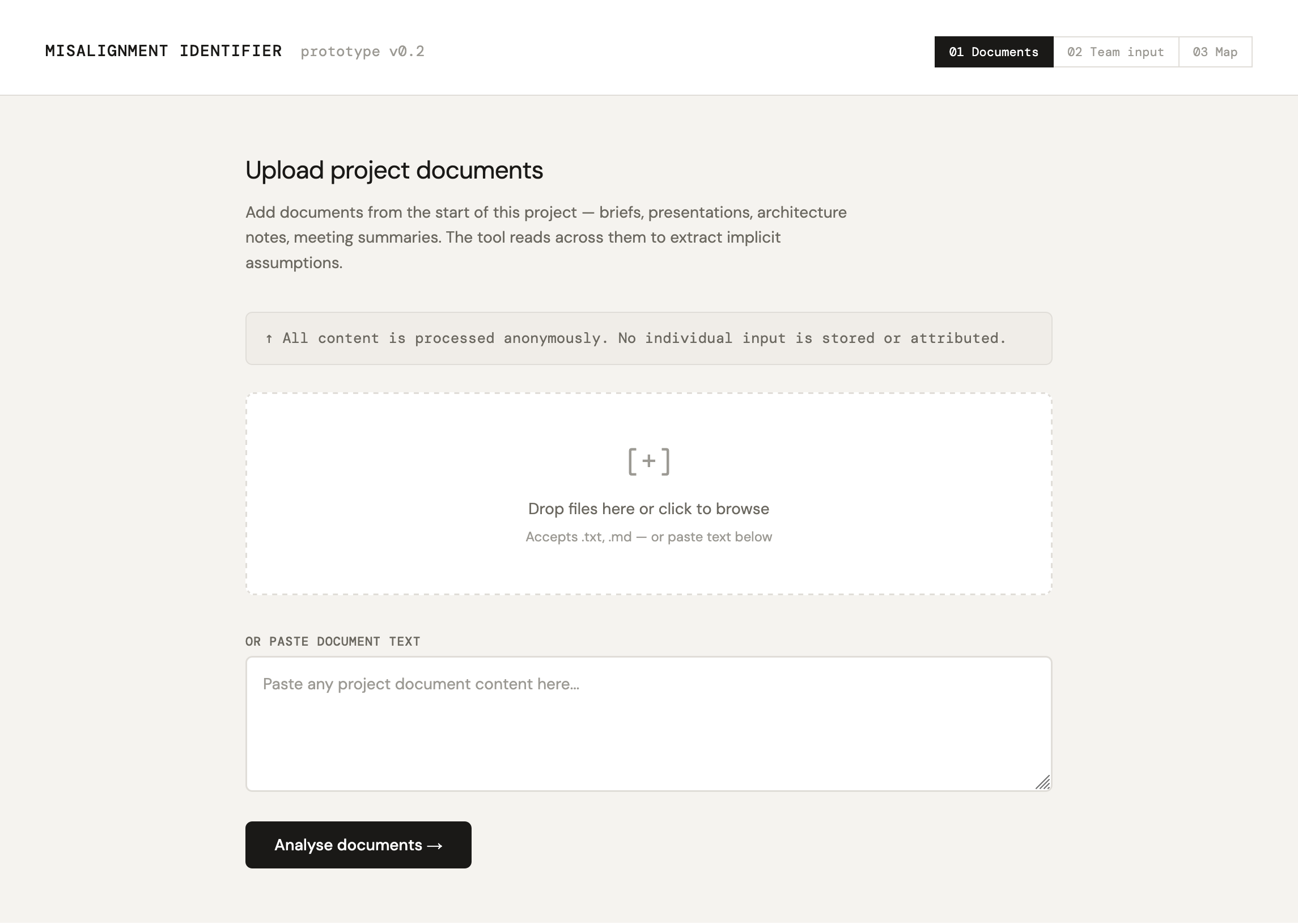
Claude suggested it could create a working prototype: ingests documents, collects anonymous team interviews, generates a misalignment map as alignment meeting agenda.
One observation worth noting
At the point where the framework calls for a storyboard and digital twin, I went straight to a prototype — because Claude offered to build it immediately. The tool is designed to catch exactly this kind of premature commitment. We did it ourselves while building it.
The real problem isn’t output anymore. It is keeping direction.
I also have some other potential ideas in mind. But now that I have already one in place – I can go to sleep.